


Next: Two electrons in an Up: Examples Previous: Counting states for Arbitrary Contents
 to
to

 to
to
 .
.
Total
 |
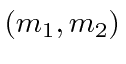 |
| 6 | (4,2) |
| 5 | (3,2) (4,1) |
| 4 | (2,2) (3,1) (4,0) |
| 3 | (1,2) (2,1) (3,0) (4,-1) |
| 2 | (0,2) (1,1) (2,0) (3,-1) (4,-2) |
| 1 | (-1,2) (0,1) (1,0) (2,-1) (3,-2) |
| 0 | (-2,2) (-1,1) (0,0) (1,-1) (2,-2) |
| -1 | (1,-2) (0,-1) (-1,0) (-2,1) (-3,2) |
| -2 | (0,-2) (-1,-1) (-2,0) (-3,1) (-4,2) |
| -3 | (-1,-2) (-2,-1) (-3,0) (-4,1) |
| -4 | (-2,-2) (-3,-1) (-4,0) |
| -5 | (-3,-2) (-4,-1) |
| -6 | (-4,-2) |
Since the highest m value is 6, we expect to have a
 state
which uses up one state for each m value from -6 to +6.
Now the highest m value left is 5, so a
state
which uses up one state for each m value from -6 to +6.
Now the highest m value left is 5, so a
 states uses up a state at
each m value between -5 and +5.
Similarly we find a
states uses up a state at
each m value between -5 and +5.
Similarly we find a
 ,
,
 , and
, and
 state.
This uses up all the states, and uses up the states at each value of m.
So we find in this case,
state.
This uses up all the states, and uses up the states at each value of m.
So we find in this case,

 takes on every integer value between the limits.
This makes sense in the vector model.
takes on every integer value between the limits.
This makes sense in the vector model.
Jim Branson 2013-04-22