There is an axis of symmetry for diatomic molecules.
This means
 commutes with
 and
and
 is a good quantum number.
The different
states, we have seen, have quite different shapes
therefore bond differently.
Imagine that a valence electron is in a
is a good quantum number.
The different
states, we have seen, have quite different shapes
therefore bond differently.
Imagine that a valence electron is in a
 state.
The
state.
The
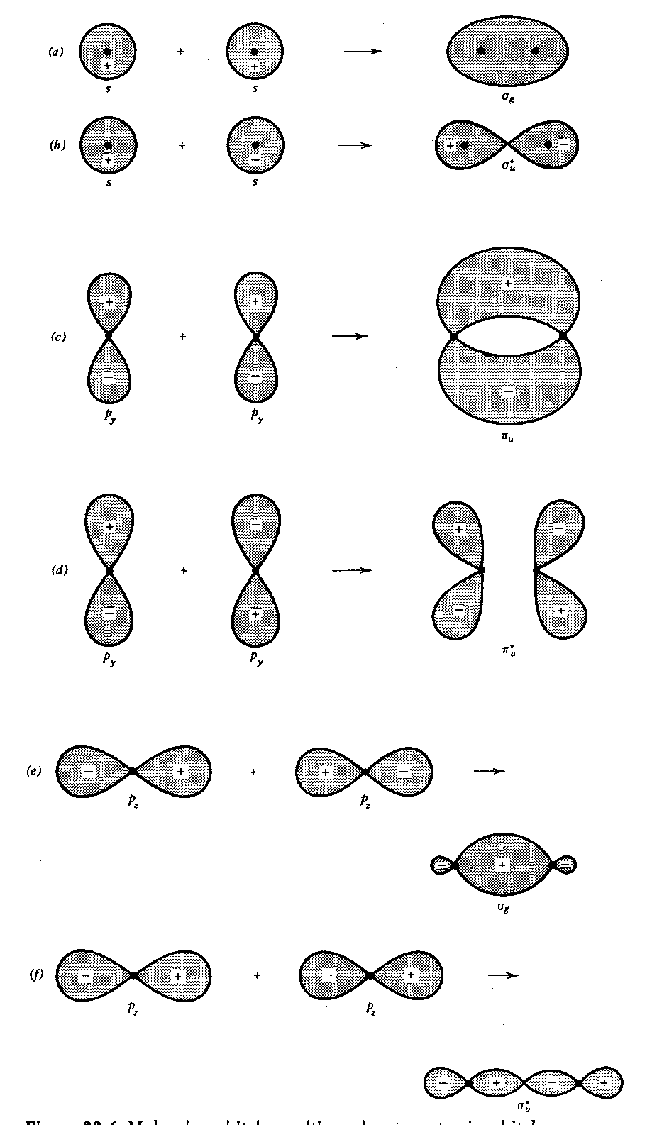
 are called molecular orbitals
 respectively.
Each has a bonding and an antibonding state.
respectively.
Each has a bonding and an antibonding state.
Pictures of molecular orbitals are shown for
 and
and
 states in the following
figure.
Both bonding and antibonding orbitals are shown first as atomic states then
as molecular.
The antibonding states are denoted by a *.
states in the following
figure.
Both bonding and antibonding orbitals are shown first as atomic states then
as molecular.
The antibonding states are denoted by a *.