


Next: The Radial Equation and Up: Angular Momentum Previous: The Expectation Value of Contents
![$[L^2,L_+]$](img1804.png) and
and ![$[L_z,L_+]$](img1805.png) .
Now show that
.
Now show that
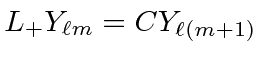 , that is,
 raises the
  eigenvalue but does not change the
  eigenvalue.
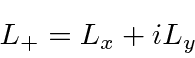 commutes with both
  and
and  ,
,
![\begin{displaymath}[L^2,L_+]=0 .\end{displaymath}](img1809.png)
![\begin{displaymath}[L_z,L_+]=[L_z,L_x+iL_y]=[L_z,L_x]+i[L_z,L_y]=i\hbar(L_y-iL_x)=\hbar(L_x+iL_y)=\hbar L_+ \end{displaymath}](img1810.png)
 .
.
![\begin{displaymath}[L^2,L_+]Y_{\ell m}=L^2L_+Y_{\ell m}-L_+L^2Y_{\ell m}=0 \end{displaymath}](img1812.png)

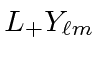 is also an eigenfunction of with the same eigenvalue.
does not change
is also an eigenfunction of with the same eigenvalue.
does not change  .
.
![\begin{displaymath}[L_z,L_+]Y_{\ell m}=L_zL_+Y_{\ell m}-L_+L_zY_{\ell m}=\hbar L_+Y_{\ell m} \end{displaymath}](img1815.png)

 raises the eigenvalue of .
with eigenvalue
raises the eigenvalue of .
with eigenvalue
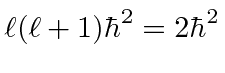 and also
an eigenstate of with eigenvalue
and also
an eigenstate of with eigenvalue  in terms of the usual .
implies
in terms of the usual .
implies  .
We will need a linear combination of the
.
We will need a linear combination of the  to get the eigenstate of
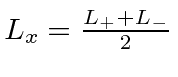 .
.



 and
and  , each term must be zero.

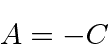
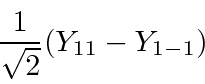
 is just a zero state, not normalizable to 1.
with eigenvalue
and also
an eigenstate of with eigenvalue
is just a zero state, not normalizable to 1.
with eigenvalue
and also
an eigenstate of with eigenvalue  in terms of the usual .
![$[p_z,L_x]$](img1832.png) and
and ![$[L_x^2,L_z]$](img1833.png) .
.
 .
.
 state and is known to have angular momentum
in the
state and is known to have angular momentum
in the  direction equal to
  . That is
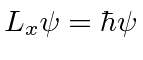 .
Since we know ,
.
Since we know ,  must have the form
 .
Find the coefficients
.
Find the coefficients  and
and  for normalized.
![$[x,L_z]$](img1841.png) ,
, ![$[L_+,L^2]$](img1842.png) ,
,
![$[{1\over 2}m\omega^2r^2,p_x]$](img1843.png) .
.
![$[H,L_z]=0$](img1844.png) .
.

 is some arbitrary radial wave function normalized such that
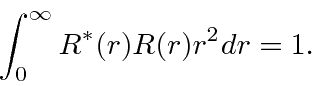 is made, what are the possible measured
values and what are probabilities for each.
is made, what are the possible measured
values and what are probabilities for each.
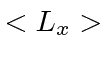 in the above state.
 and
and  are bound
together into the ground state of a diatomic molecule.
The binding is such that radial excitations can be neglected
at low energy and that the atoms can be assumed to be a constant
distance
are bound
together into the ground state of a diatomic molecule.
The binding is such that radial excitations can be neglected
at low energy and that the atoms can be assumed to be a constant
distance 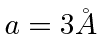 apart. (We will ignore the small spread around
  .)
is given, write down the energy
eigenfunctions for the ground state and the first excited state.
.)
is given, write down the energy
eigenfunctions for the ground state and the first excited state.
 K.
K.
Jim Branson 2013-04-22